






Copyright © SUNGROW 2023. All Rights Reserved 皖ICP备2022012337号-3

TEL
+86 - 0551 - 6532 7879
Copyright © SUNGROW 2023. All Rights Reserved 皖ICP备2022012337号-3




2022.01.21
158
In December 2021, the UN Climate Change Technology Executive Committee recognized floating PV as an emerging clean energy technology with the potential to fight climate change, drive economic growth, and support sustainable development. When combined with hydropower, these two renewables form a complementary system that meets the demands of a modern power grid—one that is clean, low-carbon, secure, manageable, flexible, and efficient.
Vast Potential, Bright Prospects
According to statistics, there are over 400,000 square kilometers of man-made reservoirs worldwide. Utilizing just 1% of this water surface for floating PV would provide a total installed capacity of over 400 GW. China alone has nearly 100,000 hydropower stations of various sizes, offering abundant water surfaces with clear ownership rights, which facilitates approval for floating PV projects. In addition, floating PV can share existing infrastructure with hydropower stations, effectively reducing overall project costs.
Hybrid Power Generation with Mutual Benefits
Hydropower is susceptible to climate variability. During dry seasons, insufficient rainfall and low water levels can lead to unstable power generation. Floating PV can complement hydropower output during these dry periods. In addition, floating PV coverage helps reduce water evaporation from reservoirs, indirectly increasing hydropower storage capacity. Combining the two enables complementary advantages. If further equipped with pumped storage and battery energy storage facilities, it can maximize the grid's capacity for renewable integration and regulation, supporting the development of new power systems.
Proven Projects with High Efficiency and Reliability
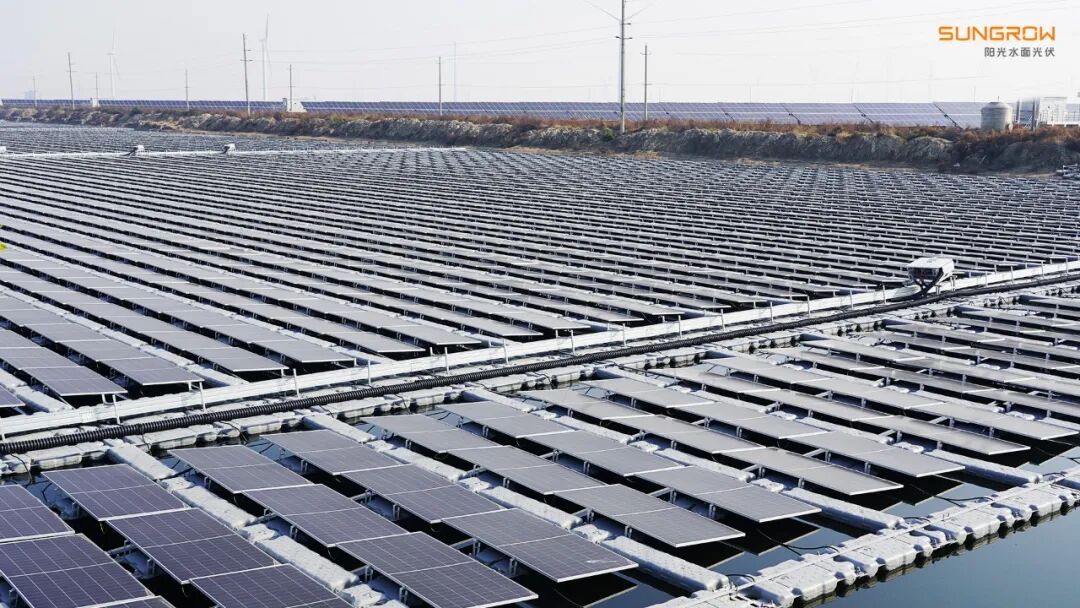
The Sirindhorn Dam floating PV project in Thailand adopts an integrated power generation model combining floating PV and hydropower. The plant was fully grid-connected in September 2021 with an installed capacity of 58.5 MW (DC), all using Sungrow FPV's systems and solutions. It is currently the world's largest floating PV-plus-hydropower integrated generation project. The plant can adjust hydro and PV output based on load variations, enabling long-term, continuous, and stable power transmission to the grid.
Thailand's 58.5 MW Sirindhorn Dam Floating PV Project
It is reported that Thailand also plans to build similar floating PV projects at nine other hydropower plants, with a combined capacity of nearly 3 GW. Indonesia, Malaysia, Spain, Portugal, and other countries have also drawn up plans to develop floating PV projects on their hydropower reservoirs. It is foreseeable that more floating PV plants on hydropower reservoirs will be built around the world in the coming years, and the combined floating PV-hydropower generation model is set to shine.
TEL